
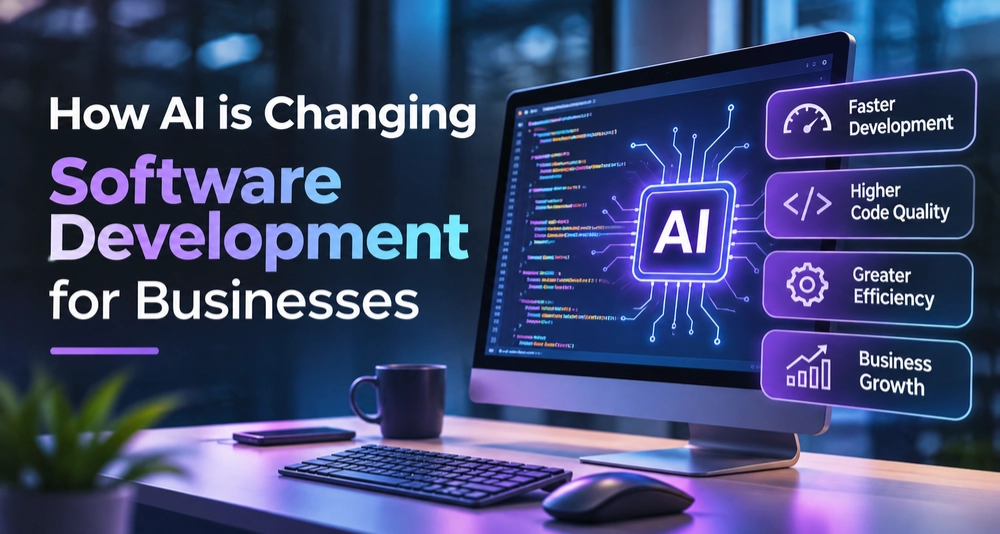
AI is changing how businesses develop software, from faster code generation to automated testing and legacy system updates. Companies can use AI to reduce repetitive tasks and speed up development, but successful adoption requires clear goals and reliable processes. Before introducing new tools, businesses can use AI auditing solutions to assess their current systems, identify suitable AI use cases, and reduce implementation risks.
For businesses that depend on custom software, these changes affect project budgets, delivery timelines, and long-term maintenance. AI can help development teams move faster, but companies still need experienced engineers to make architectural decisions and protect software quality.
How Does AI Speed Up Software Development?
AI development assistants help engineers write code, identify errors, and complete repetitive tasks. These tools can generate basic functions, suggest improvements, and explain unfamiliar code.
For example, a developer who needs to build a customer registration feature can use AI to generate an initial version of the code. The engineer then reviews the result, connects it to the application’s database, and checks security requirements.
AI also helps teams create documentation and understand existing systems. This proves useful when developers join a project with limited technical documentation or work with code written years earlier.
However, faster code generation does not always mean faster project delivery. Teams must still validate AI-generated code and confirm that it meets business requirements.
How Can AI Improve Software Testing?
Software testing often takes a considerable share of development time. AI tools can help quality assurance teams create test scenarios, analyze failures, and identify areas that need additional checks.
For example, an e-commerce platform may need to test hundreds of combinations of payment methods, discount rules, and delivery options. AI can suggest relevant test cases based on the application’s features and past defects.
AI-assisted testing can support several activities:
- Test case generation: Create initial test scenarios from requirements or existing code.
- Defect analysis: Examine error logs and suggest possible causes.
- Regression testing: Help teams identify features that require checks after code changes.
- Test maintenance: Suggest updates when application interfaces or workflows change.
These capabilities reduce manual effort and help testers focus on complex scenarios. Human review remains essential, especially for payment systems, healthcare applications, and other software that handles sensitive information.
Can AI Help Businesses Modernize Legacy Software?
Older business applications often contain outdated code, limited documentation, and dependencies that make updates expensive. AI can help developers understand these systems before they introduce changes.
For example, a company may rely on an internal application that supports inventory management. Its original developers may have left, while documentation no longer reflects the actual system.
AI tools can analyze parts of the codebase, explain functions, and suggest changes. They may also help engineers convert code between programming languages or prepare tests for older modules.
Still, legacy modernization requires more than code conversion. Developers must understand how the software connects to databases, external services, and daily business processes.
A practical approach starts with a technical assessment. The team can then identify critical modules, prioritize changes, and modernize the system in manageable stages.
What Risks Should Businesses Consider Before Adopting AI?
AI tools introduce risks that companies must address before they become part of regular development workflows.
One concern involves code quality. AI can generate code that looks correct but contains security weaknesses, inefficient logic, or outdated dependencies.
Data privacy presents another challenge. Employees may accidentally share confidential source code or customer information with external AI services. Companies need clear policies on which tools developers can use and what information they can submit.
Businesses should also evaluate the financial impact of AI adoption. Software subscriptions, integration work, employee training, and additional quality checks can affect the expected return on investment.
To manage these risks, organizations should establish code review requirements, access controls, and measurable performance targets.
How Is AI Changing the Role of Software Developers?
AI reduces the time developers spend on some routine tasks. As a result, engineers can devote more attention to system architecture, integrations, security, and complex business requirements.
Developers also need to evaluate AI-generated recommendations. A suggested solution may work for a simple application but fail under higher workloads or strict compliance requirements.
For businesses, this means technical expertise remains important when choosing a software development partner. Companies need specialists who can select suitable tools, review generated code, and make decisions based on the project’s long-term needs.
AI also changes collaboration between developers, testers, designers, and business stakeholders. Teams can prepare initial prototypes and technical documentation faster, which helps them discuss requirements earlier in the project.
How Should Businesses Introduce AI Into Their Development Process?
Companies can start with a small pilot project before extending AI tools across their development teams. This approach helps them assess potential benefits without disrupting critical operations.
A practical adoption process includes five steps:
- Assess current workflows. Identify tasks that consume significant development time, such as documentation, testing, or routine code updates.
- Select suitable AI tools. Compare available solutions based on security, compatibility, cost, and required capabilities.
- Run a limited pilot. Introduce AI into one project or a clearly defined development activity.
- Measure the results. Track development time, defect rates, review effort, and team feedback.
- Expand gradually. Apply successful practices to other projects while maintaining quality controls.
For example, a company could initially introduce AI-assisted test generation rather than changing its entire development process. Once the team confirms the results, it can evaluate additional applications.
The key is to connect each AI initiative to a specific business objective. Without measurable targets, companies may invest in tools that add complexity without delivering meaningful improvements.
What Does AI Mean for the Future of Business Software?
AI will continue to influence how companies plan, build, test, and maintain software. Development teams already have access to tools that assist with coding, defect analysis, documentation, and system modernization.
For businesses, the most useful opportunities often come from specific problems within existing workflows. A company that struggles with software maintenance may benefit from AI-assisted code analysis, while a team with lengthy testing cycles may see more value in test automation.
Successful adoption depends on technical assessment, clear priorities, and consistent quality standards. Companies that evaluate AI tools against real project requirements can improve development processes while maintaining control over security, costs, and software reliability.